Analytics cookies
We would like to use Google Analytics and PostHog to see which drills and pages people actually use. Both are off until you agree, and the site works the same either way. Either way we count visits in our own records, and if you arrived from a creator's link we remember that for this visit so they get the credit. Privacy policy
I ladder when I should attack, because the jump feels bigger than it is.
Know what one more place is actually worth. Players ladder on instinct, and the instinct is usually calibrated to the wrong jump. Most of the money in a payout structure sits in the last two or three places, which means folding into a tiny jump early costs far more than it saves. This drill runs real ladders until you can see where the money actually is.
Same payouts: £6,000 / £3,600 / £2,400 / £1,800. Which single jump is worth the most?
This is what a rep looks like
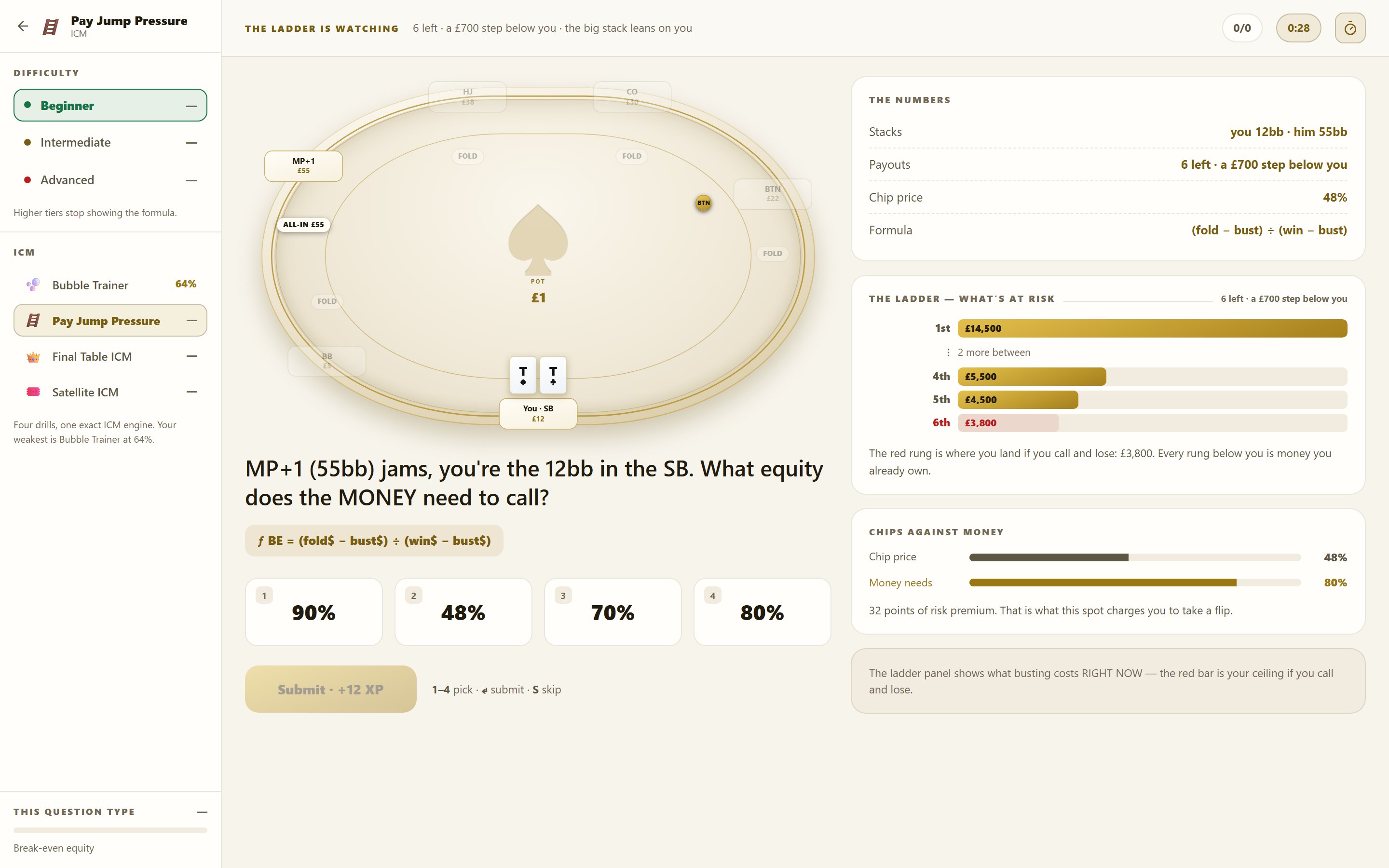
Reading a payout structure for where the money concentrates
What busting costs against what laddering gains, in cash
When survival is genuinely worth more than chips, and when it is an excuse
Spot. Answer. The working. Next.
Every rep is the same four seconds of pressure, on purpose. Accuracy and speed feed your streak, and wrong answers come back at the end of the set.
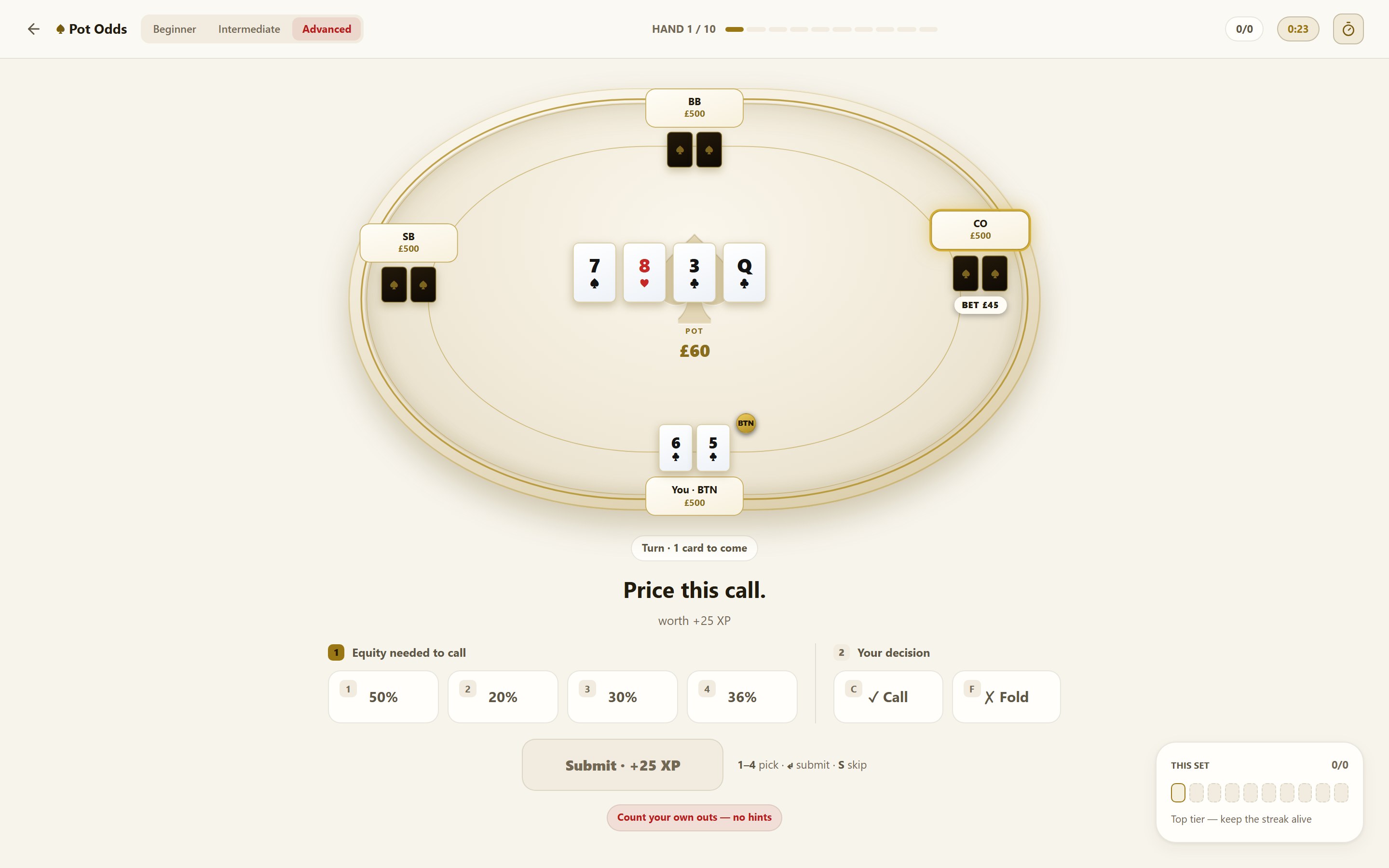
A real hand, a real price, and the clock already running.
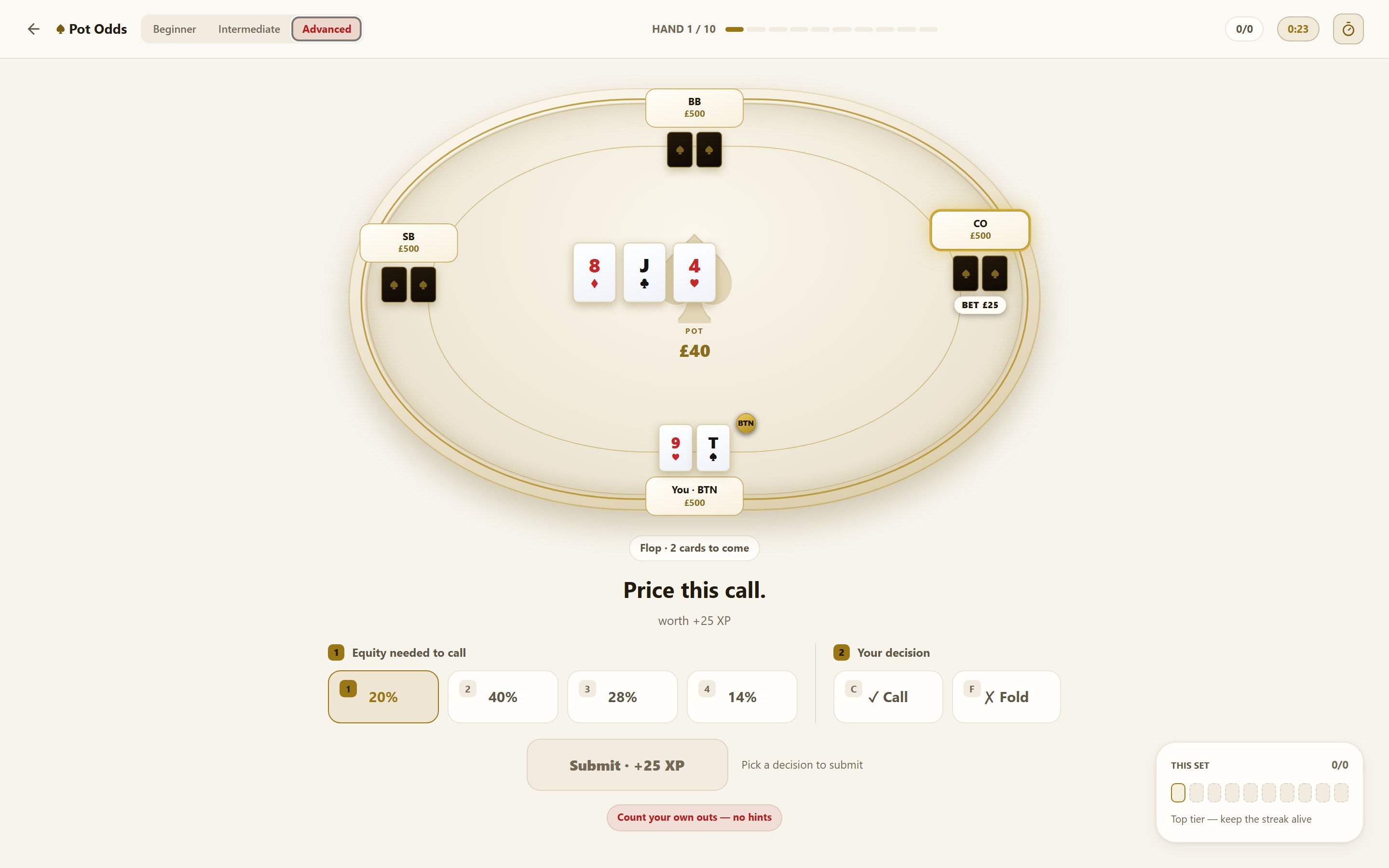
Pick the equity, make the decision. No hints on the top tier.
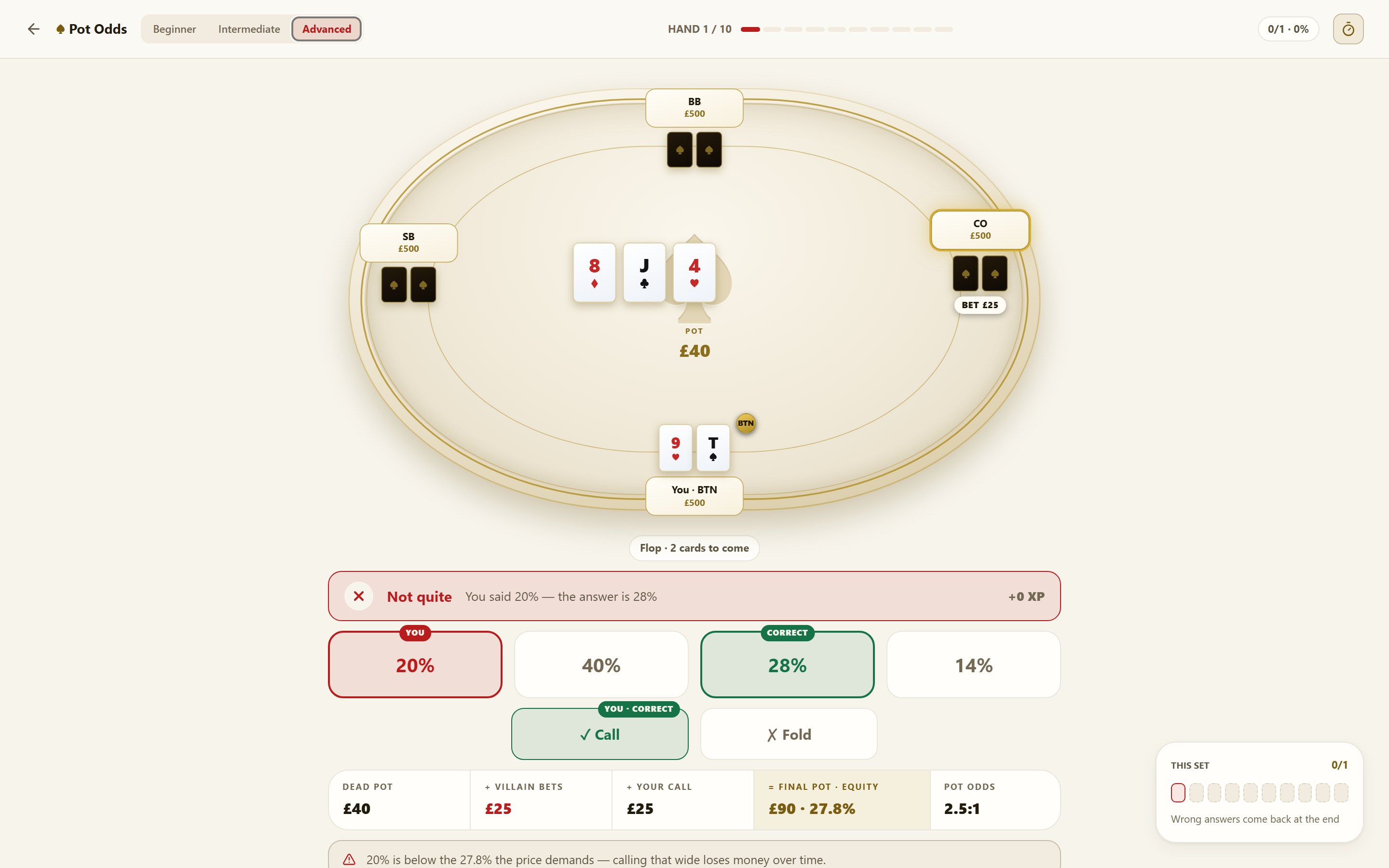
Right or wrong, the full arithmetic is laid out. Wrong answers come back at the end of the set.
The loop shown in the Pot Odds Trainer. Every drill runs the same way: spot, answer, working, next.
Pay Jump Pressure is on the free plan with daily free questions. Pro removes the cap on this and every other drill.
- ✓Unlimited drills, sessions and replays
- ✓Every breakdown: venue, stake, series, year
- ✓Staking capture and unlimited player notes
About Pay Jump Pressure
Most do, but not all, and flat structures change the answer completely. The drill uses real ones rather than a single example.
Often, on a steep jump with a shorter stack still in. The point is to know which case you are in.
It runs on the same engine, but the question here is the structure rather than the stacks.