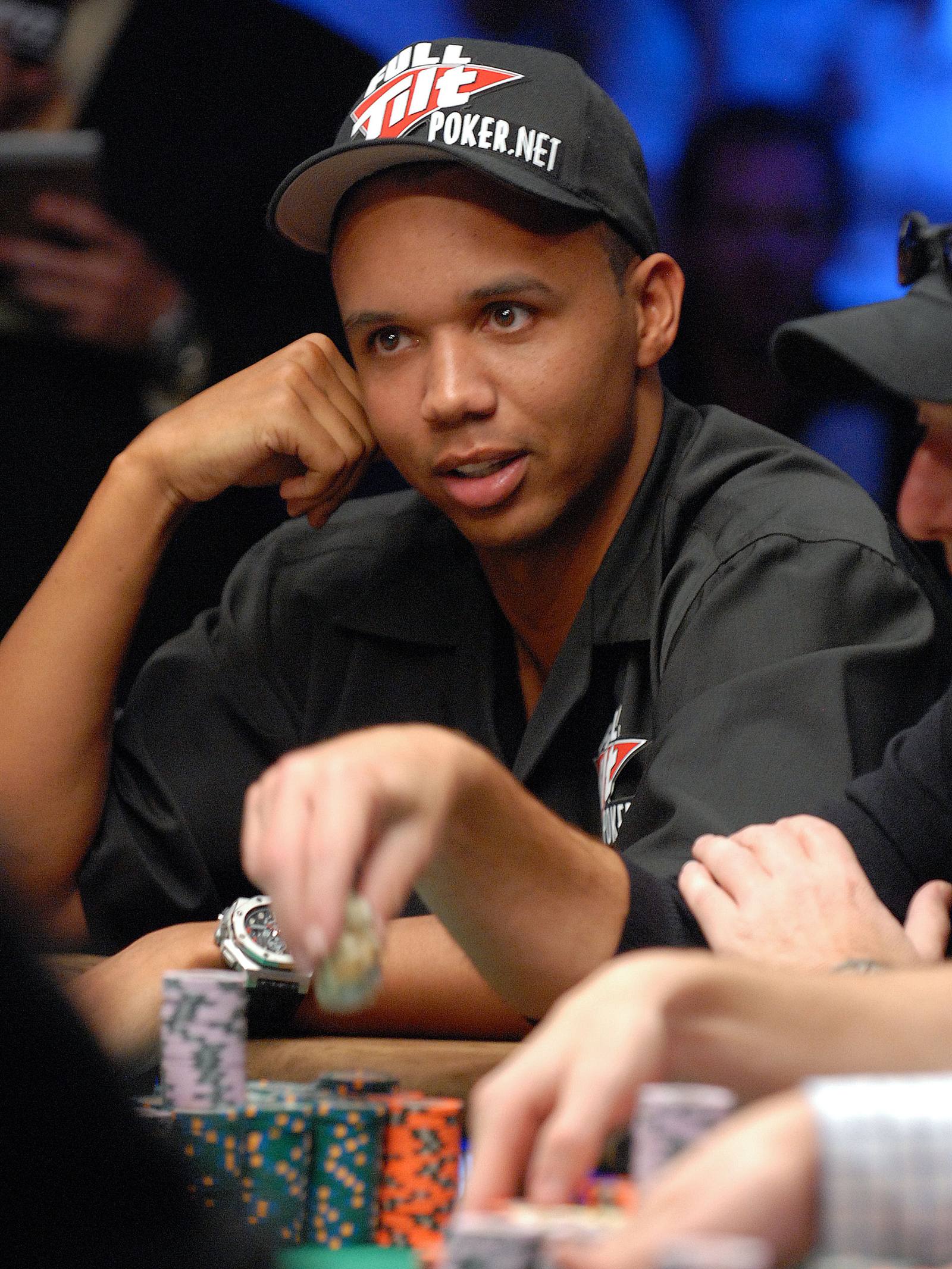
In September 2009, on Full Tilt's Million Dollar Cash Game in London, Tom Dwan and Phil Ivey played a pot of roughly 1.1 million dollars, a televised record at the time. Two of the best players alive got their money in on a hand that looked like a coin flip and was anything but. It is one of the most instructive hands ever filmed, because it shows exactly how equity swings from street to street, and how a hand can look alive right up to the moment it is drawing dead.
The setup
The blinds were 1,000 and 2,000 dollars with a 200 ante, deep-stacked high-stakes cash, played three-handed with Patrik Antonius in the big blind. Dwan raised, Ivey three-bet from the small blind, Antonius folded and Dwan called. The flop came queen of clubs, five of clubs, three of diamonds. Ivey led for 40,000 and Dwan called, and the pot was still only building. What makes the hand a teaching tool is not the size, it is the shape: two strong players, both with genuine equity on the flop, whose fortunes diverged completely by the turn.
Both players flop a draw
On the flop, both hands were drawing rather than made. That is the first lesson. When two aggressive players commit large amounts on a low, connected board, it is often not a case of one big hand against a bluff. It is frequently two draws colliding, each with real equity, each representing more than it has. Working out who is actually ahead requires counting outs and comparing straights, not just noticing that both players seem confident.
At this stage both players hold a gutshot to the same card. Dwan needs a four for three-four-five-six-seven, Ivey needs a four for the wheel, and there are four of them in the deck. The pot is genuinely close, both players can improve, both can miss, and the equity is shared. This is the moment where a weaker player convinces themselves they are far ahead or far behind, when the truth is that the hand is still being decided by the next card.
The turn decides it
Then the turn brings the four of hearts, completing a straight for both players, and this is where the hand turns from close to cruel. Ivey bet again, Dwan raised to 240,000, Ivey tanked and then shoved, and Dwan called instantly. That instant call is the tell: he was not weighing a decision, because there was not one left to weigh. Dwan makes three-four-five-six-seven. Ivey makes the wheel, ace to five. Dwan has the higher straight. And because they share the same run of cards, the lower straight is not merely behind, it is drawing dead: there is no river card that can save it, because any card that would improve Ivey also plays the board or improves Dwan.
That is the whole lesson in one image. On a four-to-a-straight board, the question is never just "do I have a straight." It is "whose straight is bigger," and the difference between the two ends of the same straight is the difference between a monster and a hand with no outs at all. A player who counts only their own hand sees a straight and commits. A player who counts both sees that the higher straight owns the pot completely.
What it teaches your game
You will never play a million dollar pot, but you will constantly face the smaller version of this hand: a board where a straight is possible and you hold part of it. The skill that saves you money is the same one Ivey, on this occasion, ran into the wrong side of. Before the money goes in, count the straights. Ask which end of it you hold, what beats you, and how many combinations of the better hand the villain can actually have. That counting is combinatorics, and it is trained in the Combo Counter drill and explained in How to Count Poker Combos.
The equity read across the streets is the other half. Learning to see when a hand is still close, when it has flipped, and when it is drawing dead is exactly what the Equity Simulator builds, by letting you watch how real matchups run out. Pair both with the pricing you get from the Pot Odds Trainer, and hands like this stop being coin flips you hope to win and become decisions you can actually read. For more broadcast hands broken down this way, see The Jack-Four Hand, Rerun With Combos.
The biggest pots turn on the smallest counts. Learn to run them before the money goes in. Start training free at drills.poker.